Richard von Weizsäcker Forum 2024
Image
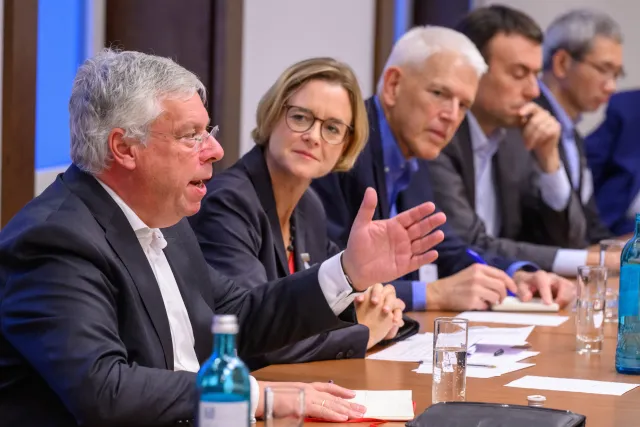
This year, our Richard von Weizsäcker Fellows gathered in Germany to discuss the nature and nuances of the changing international order with German members of parliament, analysts, activists, teachers, and students. Together, they explored how the changing international order is shaping Germany’s socio-political discourse. They also looked at how the multitude of conflicts impacts the country’s social fabric and influences political realities here in Germany.
In many ways, 2024 has been a critical year. Not only has it seen many decisive elections, the year has also witnessed an escalation of armed conflicts in Ukraine, Gaza and the greater Middle East. It also saw the rise of right-wing policies and politicians across the world; and communities exposed to devastating impacts of climate change. In addition, the inability of a global multilateral system to provide adequate responses to these challenges exposes fault lines between the affluent and powerful West and the emerging, ambitious so-called Global South. In countries in the Global South that choose to pursue their own agenda, regional and alternative interest-based alliances are gaining popularity. Moreover, Western countries’ role in accelerating climate change, exacerbating inequality, and undermining human security, combined with accusations of double standards, has further eroded the credibility of and trust in the so-called liberal world order. There is a shared sense of disappointment, especially in the Global South as established and powerful countries in the West refuse to acknowledge the power shifts so as to thwart the emerging powers’ aspirations.
Challenges for Germany
One of the dominant topics during the panel discussions and working-group sessions was the increasing inability of the flawed multilateral system to deliver a global common good. The resurgence of nationalism and protectionism in many parts of the world has weakened the multilateral institutions that were once the bedrock of global governance. There was a broad consensus that the multilateral system doesn’t provide enough space for emerging countries to represent their interests.
Making the broader discussions around multilateralism concrete and looking at it through an EU/German lens bridged the gap between the theoretical conversations around how multilateralism needs to change, on the one hand, and the challenges of rolling out those reforms for a country like Germany or the broader EU, on the other. Some of the key aspects that came up in the discussion were:
The US-China Dilemma
In any conversation that involves the changing world order, the US-China rivalry and its implications are often central – and the Forum was no exception. Working groups addressed this issue while factoring in the nuances and challenges presented by politicians, China observers, and some of our Chinese fellows:
Climate change
Climate change and the efforts to minimize its impacts on vulnerable communities needs to be understood when looking at the changing international order. We invited Carlos Alvarado Quesada, the former president of Costa Rica, and Farhana Yamin, a climate activist and internationally acclaimed lawyer, to discuss this.
The Zeitenwende in Germany
During the Forum, there was a consensus that the changing global order not only impacts the international landscape but is interconnected with political developments at a domestic level. These international debates are actively reshaping local communities and have begun to influence the everyday life of individuals. In Germany, factors such as the rise of the far right, inconsistent policy decisions regarding migration, inclusion and diversity, conversations around climate change, and shifts in the international order are having a significant impact on a local level. What do these changes look like? What are the challenges Germany faces? Is it taking concrete steps to respond? If not, what could it do?
The Forum came up with these thoughts:
An important space where some of the mentioned conflicts around migration, class, etc. play out is in school classrooms where multiple worldviews confront one another. Students of all ages struggle with issues around belonging and identity. This is a space that if not tackled tactfully has the potential to influence impressionable young minds. On the other hand, if tackled in a strategic manner, this space could also instill faith in their minds about the society and the system that they are a part of. How could this be done?
Think. Debate. Inspire. And Celebrate ...
2024 has also been a special year for the Robert Bosch Academy as it celebrates its tenth anniversary. The Academy, founded in 2014, now boasts of 118 Fellows from 49 countries – an achievement that the Academy takes pride in.
The Academy couldn’t have been so special had it not been for the Fellows who fill it life, thought-provoking discussions, and camaraderie that transgresses boundaries. We asked the Fellows to share why an institution like the Academy is important and the role it can play in polarizing times.
The Spirit of the Robert Bosch Academy – Perspectives from our Fellows
And last but not least, birthday wishes to the Academy and to everyone who makes it what it is – a space to Think. Debate and Inspire.