Richard von Weizsäcker Forum 2022
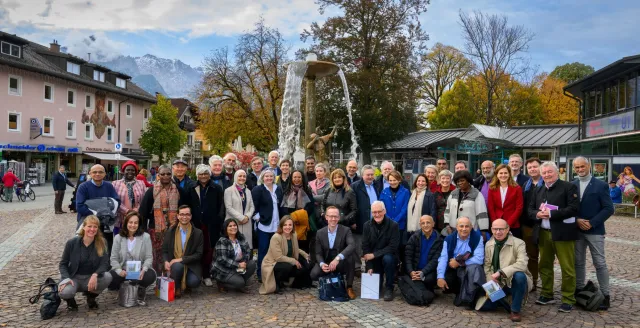
The Alps: where you can see climate breakdown
Michael Rapp: “Every part of Germany has different energy needs as well as access to different sources of raw materials they can use for a viable energy transition. We need more support from the federal government to build up infrastructure in line with the local availability of resources, making the energy transition more affordable for the public.”
Ulrike Wolf: “The tourism industry as well as any other industry needs to adapt to a more climate friendly mode of operation, especially given the fact that tourism is highly dependent on intact ecosystems and that many touristic attractions are located in environmentally sensitive areas. The industry needs to address the complicated challenge of providing cost effective solutions while ensuring that these areas remain intact.”
Hans Peter Schmid: “Knowledge transfer from our research to all levels of the public is part of our mission. In many cases, our science-based recommendations for climate change mitigation and adaptation are received with great interest. However, this is usually as far as it goes. It remains difficult to convince policymakers and civil society of the urgency of mitigation measures, even in the face of dramatic evidence of climate warming impacts now and in future.”
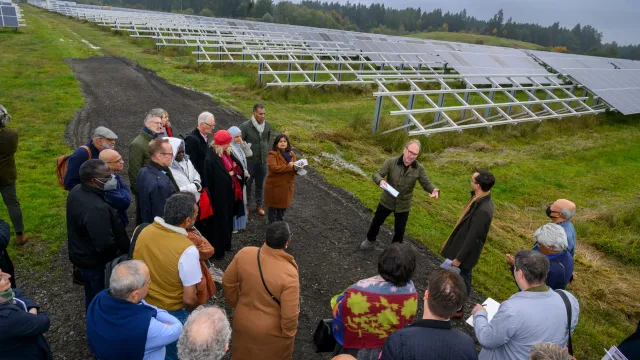
Stephan Jocher: “It was a long and tiring process to finally construct this solar park and convince the people and the politicians of its advantages. In the future, we need to find different ways of energy production like solar, hydrogen, and plant carbon, rather than relying on a single source to ensure energy security. The sooner the governmental agencies understand this and make the process easier, the better it will be.”

Filiz Albrecht: “We as a company have been carbon neutral worldwide since 2020 – the first global industrial enterprise to achieve this. As pleased as we were to achieve this goal, we do not see it as the end of the road for our efforts. Climate protection is only one facet of sustainability. Under the term sustainability, we at Bosch also consider saving of resources such as energy and water at our locations and the research in new technology equally important. Sustainability is not a "nice to have" topic but it has become the core mission of everything we do and we want others to follow our path as well.”
Helena Geissler: "It is often difficult to unite different civil society actors behind specific political demands regarding climate change and sustainability. It’s an achievement that we have received such strong support for the Munich Sustainability Initiative and that so many civil society actors actively engage in our initiative. This support also shows local politicians that these issues are very important to civil society and urges politicians to bring about change.”

Klara Bosch: “I’m aware that I am not a politician or a democratically elected representative and don’t have a right to decide or change things quickly. However, through my work with Fridays for Future, I do want to show that as a member of the civil society, one can still participate in the decision-making process and bring about a change.”
-
Image
-
Image
-
Image
-
Image
-
Image
Germany’s political action in the climate emergency
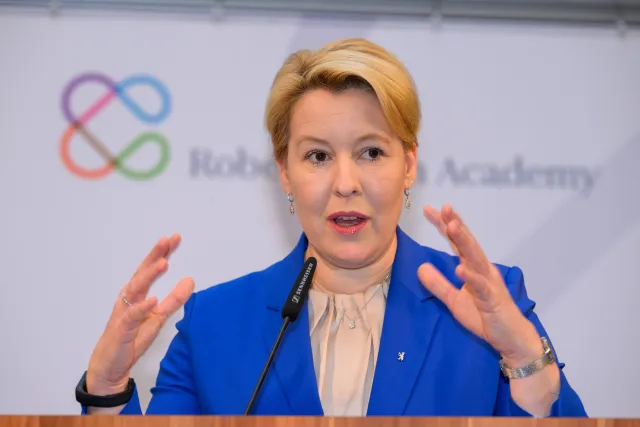
Franziska Giffey: “When talking about climate action, we must see the discussion in the framework of social cohesion and economic development. We need to provide good infrastructure and alternatives, such as affordable public transportation and charging stations for electric cars.”
Michał Kurtyka: “We are fooling ourselves if we believe that COPs are going to solve the problem of climate change. The sooner we understand this and consider approaching this in a different way, with industry, banks, civil society at the table, the better it is.”
Samantha Gross: “The world is not going to solve the problem of climate change by assuming that less energy consumption is the way ahead. This approach will only lead to an unjust, inequitable transformation process. We must find ways to make the energy transition a just one.”
Kumi Naidoo: “The climate crisis is a consequence of drastic failure of our democratic financial and governance systems that have supported unhinged overconsumption for so long. Governments and businesses need to undergo a fundamental change for climate change to become bearable and just.”
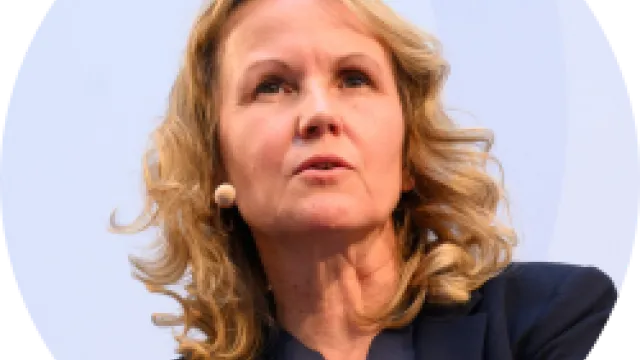
Steffi Lemke: “It’s my goal to ensure that in the future we can have a good standard of living - even under the conditions of the climate crisis. That’s why I’m working on natural climate protection, and to achieve this I’m pursuing comprehensive adaption policies that encompass and link all stakeholders.”